


pet health insurance average cost, decoded for calmer decision-making

The typical monthly spend right now

Big picture, accident & illness plans tend to cluster around these ranges: dogs: $40 - $75/month, cats: $20 - $45/month. Accident-only plans usually land lower: dogs: $10 - $25/month, cats: $8 - $20/month. Seniors, high-risk breeds, and high-cost metros can run hotter: dogs can push $90 - $150/month, cats $35 - $70/month, especially with richer benefits.

Annualized, that's roughly $480 - $900 for many dogs and $240 - $540 for many cats on accident & illness, before deductibles and co-pays. The "average" hides a lot of texture.

What actually moves the premium

  • Species and breed risk: Frenchies aren't priced like mutts; Maine Coons aren't priced like DSH cats.
  • Age: each birthday matters. Younger usually costs less and keeps options open.
  • ZIP code: local vet fee inflation flows straight into premiums.
  • Coverage depth: accident-only vs accident & illness vs wellness add-ons.
  • Deductible: higher deductible (e.g., $500 - $1,000) lowers premium; lower deductible ($100 - $250) raises it.
  • Reimbursement %: 70% is cheaper than 80% or 90%.
  • Annual limit: $5k vs $10k vs unlimited can swing price meaningfully.
  • Waiting periods and exclusions: tighter rules can trim cost, but watch the trade-offs.

Quick math: make a quote feel real

  1. Annualize it: $58/month becomes $696/year.
  2. Add your likely deductible: common picks are $250 - $500.
  3. Apply co-insurance: at 80% reimbursement, you pay 20% of covered costs after the deductible.
  4. Stress test with a mid-size claim: say a $1,800 GI issue. Out-of-pocket ≈ $500 deductible + 20% of $1,300 = $500 + $260 = $760, plus your premium.
  5. Then a big claim: $4,000 surgery. Out-of-pocket ≈ $500 + 20% of $3,500 = $1,200, plus premium. This is where insurance stabilizes the worst-case cash hit.

A small, real-world moment

Last spring, my dog swallowed a sock - classic. The bill was about $3,200. With an $500 deductible and 80% reimbursement, I paid roughly $1,040 out of pocket. I submitted the claim in the parking lot; the reimbursement posted six days later. Not glamorous, just steadying.

How to estimate your own number in five minutes

  1. Get two quotes: one at $500 deductible, 80% reimbursement, $10k limit; another at $250, 90%, unlimited.
  2. Note the monthly difference. That gap is the price of richer smoothing.
  3. List likely risks for your breed (hips, skin, IVDD, HCM) and sanity-check limits.
  4. Pick the plan where the worst-case bill wouldn't derail your budget.
  5. Re-run the quote a week later; prices sometimes nudge after filings or birthdays.

Ways to stabilize the bill without cutting coverage too far

  • Cap the limit smartly: $10k often covers most non-specialty years; unlimited is for high-risk breeds or big-city specialists.
  • Raise the deductible to the edge of comfort: what amount could you calmly pay on any Wednesday?
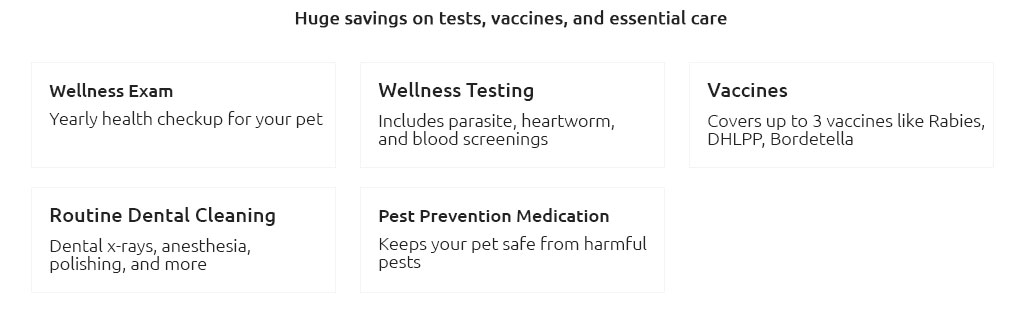
  • Skip routine-care add-ons: many are prepaid checkups; compare to your clinic's wellness pricing.
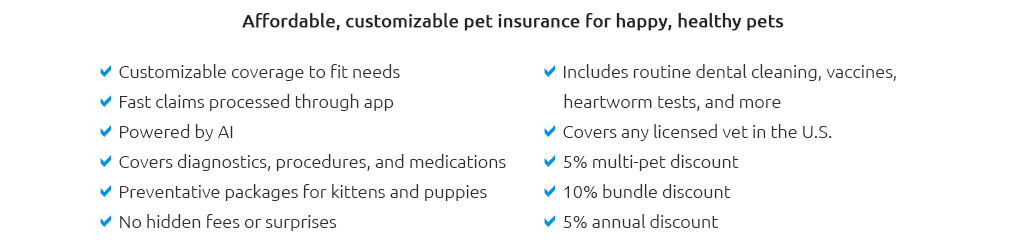
  • Bundle siblings thoughtfully: multi-pet discounts help, but run each pet's math separately.

Quiet caveats that bend the averages

  • Pre-existing definitions differ: some reset after 12 - 24 months symptom-free; others never do.
  • Per-incident vs annual deductibles: subtle wording, big cost swing.
  • Rate creep: medical inflation is real; expect periodic increases.
  • Claim friction: direct pay vs reimbursement timing changes your cash flow, not the math, but it matters on stressful days.

Is it worth it? A calm way to decide

If you can absorb a $3,000 - $5,000 surprise without stress, you may lean to higher deductibles or even accident-only for young, healthy pets. If predictable payments help you protect savings - and your breed or city trends expensive - full accident & illness at mid settings (e.g., $500 deductible, 80%, $10k limit) usually balances price and stability.

Simple rule of thumb

Premium under about 1 - 2% of take-home income and a plan that blocks four-figure shocks is generally a good trade. If it's much higher, tighten coverage or consider a larger deductible and a small, dedicated pet fund.

I'll admit a soft doubt: the "average" is a moving target. ZIP codes shift, vet fees rise, and two insurers can define the same term differently. That's okay - your goal isn't perfect forecasting; it's removing bill panic from an already hard moment.

Final nudge

Get two or three quotes, model one mid claim and one big claim, and choose the setting where you'd sleep fine either way. That's the real win behind the pet health insurance average cost: less drama, more control.


inslowcostlz
4.9 stars -1803 reviews